

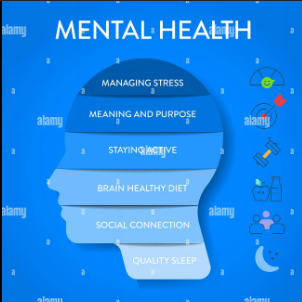
Happy May, everyone! May is what most people consider a month between spring and summer, where the weather is too hot to be considered springtime weather, but not quite hot enough to be considered summer! Along with the blooming flowers brought on by the April showers, May brings mental health awareness month!
But what exactly is mental health and why is it important?
Mental health problems are often categorized as mental, emotional, and/or behavioral disorders that can cause depression, loneliness, feelings of not belonging, and general unhappiness. The definition of mental health as used in the government CDC article on mental health, mental health is “the component of behavioral health that includes our emotional, phycological, and social well-being.” This means that mental health affects us in lots of different ways, not just emotionally and mentally. One study done in 2022 revealed that nearly one in every five young people have mental health problems. Some very common mental health problems include depression, bipolar disorder, and schizophrenia.
Mental health is classified into two different levels of severity: AMI and SMI, which stand for Any Mental Illness and Severe Mental Illness. Severe mental illnesses can impact daily life and routines, sometimes making people feel like they are broken or worthless because of it.
Taking care of mental health is important because poor mental health can affect everything from mood to coordination to relationships to daily routines. Making sure that your mental health is okay is important for everyone, because it doesn’t just affect you, it affects everyone who interacts with you. Making sure your mental health is well taken care of is important throughout all stages of life. From schooling to housing to parenting to retirement, taking care of your mental health is vital to living a happy life.
How has mental health been treated throughout history and how does the world today impact mental health?
Throughout history, mental health problems have been classified as a curse, witchcraft, or general craziness. People who showed signs of mental health problems were avoided, executed, or sent away to asylums. Mental illnesses were first recognized as a medical condition in Ancient Greece, and this idea of it being a medical condition came around again in the 1800s Enlightenment. The Ancient Greeks studied mental health and tried to come up with cures or ways to help those suffering from it, but it was first widely studied during the 1800s, with many sources saying the first actual documentation of mental health studies showed up around 1946. Before studies started showing different kinds of mental health stressors and symptoms, many people were falsely accused of having mental health problems because they acted differently. During the Victorian Era, many women were sent to mental institutions under the guise of being mentally unstable. Another period in time where mental institutions were overflowing was around the 1950s. The U.S. society’s unwanted were being thrown in asylums and taking up space in these places that were supposed to be dedicated to studying problems that were actually disrupting lives. Seeking help for mental health became more popularized around the 2000s, with celebrities in pop culture promoting mental health and seeking help as a positive thing, marking the start of an age where accepting help is socially acceptable.
To this day, people accept help and grow as people, making America a happier and healthier place. So, if you’ve been feeling down and want to talk to someone about it, consider asking for help. It might seem hard at first, but it will most likely only bring positive things and growth in personal life and relationships.
If you or anyone you know has thoughts of hurting themselves, then don’t be afraid to call the Suicide & Crisis Lifeline at 988. It’s free, confidential, and available 24/7. You can also chat online through the 988 Lifeline website.
Written by: Ellen Koenitzer
Edited by: Austin Nguyen – Mathias Munoz Gonzalez – Harrison Davies
Discover more from The Talon Times
Subscribe to get the latest posts sent to your email.